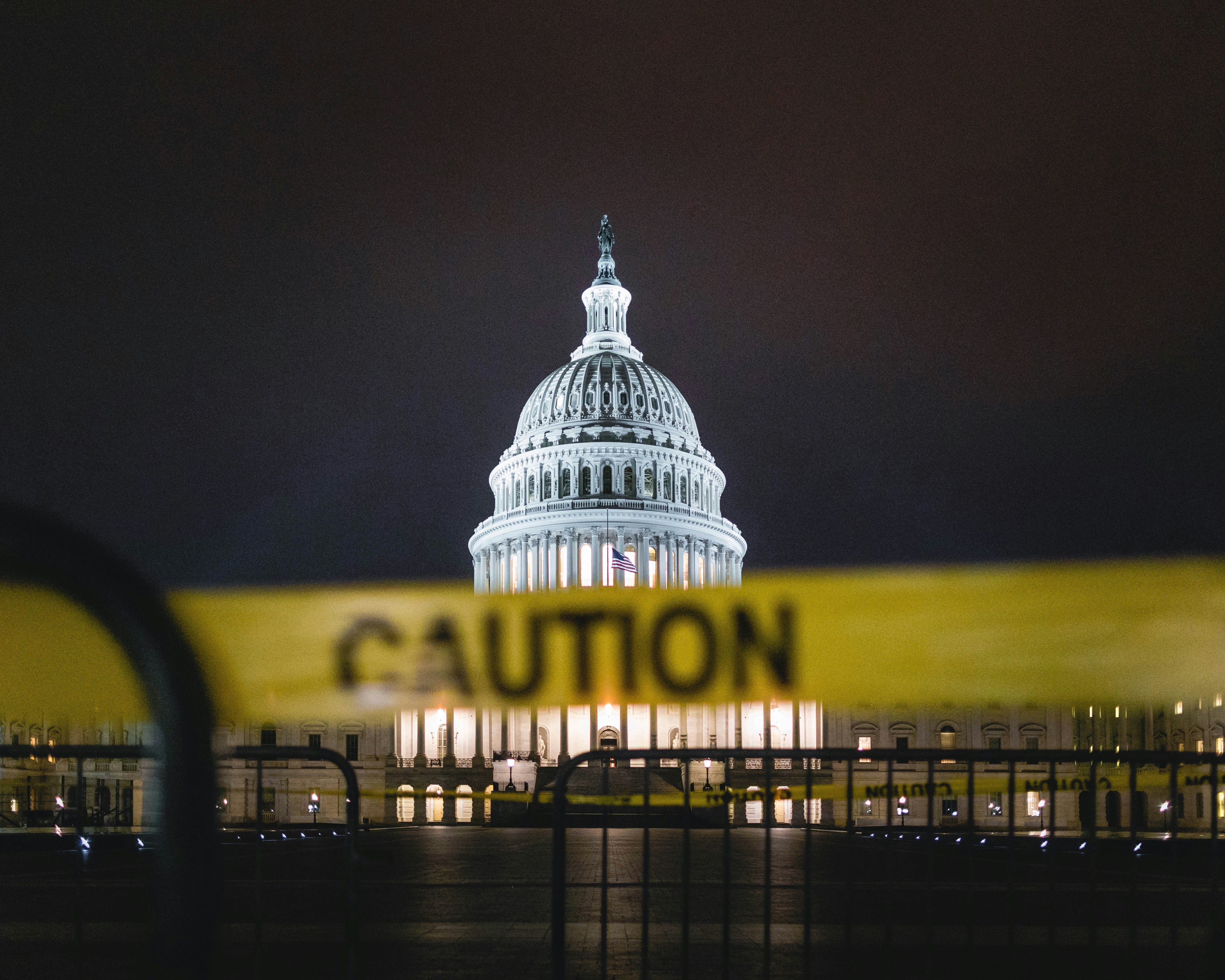

For 43 days, the federal government was shut down... leaving millions of Americans in limbo and Congress locked in a familiar blame game.
It has now been a little over a week since the U.S. House of Representatives ended the shutdown by passing the Republican-led Continuing Appropriations, Agriculture, Legislative Branch, Military Construction and Veterans Affairs, and Extensions Act, 2026 by a vote of 222–209. Passage of the bill restored Supplemental Nutrition Assistance Program (SNAP) to roughly 42 million Americans with little or no income who rely on it to afford groceries.
During the shutdown, Republicans blamed Democrats and Democrats blamed Republicans for the impasse. Republican Maryland Representative Andy Harris, speaking in front of the Speaker of the House, stated, “Millions of Americans have suffered unnecessarily because the Democrats refused to reopen the government, including those who depend on SNAP benefits, federal workers, border patrol agents, and our troops who were uncertain about their next paycheck.”
Democrats argued that contingency funding could have prevented any disruption to the Supplemental Nutrition Assistance Program (SNAP), while giving the House more time to address unresolved issues related to healthcare subsidies and Medicare cuts.
What was largely absent from that exchange, however, was acknowledgment of a bigger issue. The One Big Beautiful Bill Act (OBBA), which passed in July, significantly changes SNAP eligibility rules. States were required to begin implementing those changes by November 1, a date that conveniently fell in the middle of the government shutdown. As public attention centered on delayed payments and partisan blame, far less notice was given to the policy shift that could remove millions of previously eligible Americans from the program.
The main way the OBBA aims to do this is through heightened emphasis on the Able-Bodied Adults Without Dependents (ABAWD) provision, which stipulates that most adults who do not have a disability or dependent are required to be working, looking for work or involved in a job training program for 80 hours per month to remain eligible for their SNAP benefits.
Under the new rules, there are fewer exemptions from the definition AND those who fall into this category are limited to receiving benefits for just three months within a three-year period if they cannot meet the work requirements. This seems willfully ignorant of the systemic, socioeconomic, and environmental barriers that make securing stable employment difficult.
At Daily Work, many of our job seekers are actively seeking employment but face real obstacles such as limited English proficiency, unrecognized foreign credentials, lack of reliable transportation, or gaps in work history due to displacement or caregiving. These barriers do not disappear simply because someone is considered “able-bodied.”
Republicans have framed these measures as morally justifiable, arguing they are about “getting American men to work.” At the same time, the rhetoric surrounding the changes often portrays low-income people who rely on SNAP as lazy or exploiting the system.
House Speaker Mike Johnson expressed this view when the OBBA was being debated in May, stating, “If you are able to work and you refuse to do so, you are defrauding the system. You’re cheating the system. And no one in the country believes that that’s right. So, there’s a moral component to what we’re doing. And when you make young men work, it’s good for them, it’s good for their dignity, it’s good for their self-worth, and it’s good for the community that they live in.”
That narrative does not reflect the people we encounter at Daily Work every day. The vast majority of people we serve are actively seeking employment, often balancing part-time jobs, job training, English classes, and caregiving responsibilities. It also overlooks a fundamental purpose of SNAP: it is designed as a work support program, helping low-income individuals secure and maintain employment. Reliable access to adequate, healthy food is not a reward for work. It is a prerequisite for it.
In addition, Agriculture Secretary Brooke Rollins also confirmed that current SNAP recipients will be required to reapply in order to remain eligible creating greater barriers for those struggling the most. For many of the job seekers we serve, the reapplication process is not a simple administrative task. It requires documentation, online access, English proficiency, support from someone who does know English... all of which can be difficult to secure. Even a small paperwork error can result in delayed or terminated benefits.
While Congress debates work requirements, at Daily Work we remain focused on our mission: supporting people who are learning English, retraining for new careers, caring for family members, and showing up every day in pursuit of opportunity. That is the reality we see... and it deserves policies that reflect it.
______________________________________________
Rafa Buettner-Salido earned his BA in Journalism from the University of Minnesota in 2021 and has since worked in roles focused on support and advocacy, including adult ESL instruction, public school technology support, and social services as an ARMHS practitioner. He is currently a student intern at Daily Work and is pursuing his MSW at the University of St. Thomas in St. Paul.
To learn more: check out these sources.
https://www.newsweek.com/snap-benefits-update-millions-removed-from-program-11058795